Manhattan Beach Home Inspection: What Impacts Credit Asks
August 6, 2026
August 6, 2026
A seller in the Tree Section signed the offer on a Sunday, poured a glass of wine, and treated the price as settled. Fourteen days later the buyer's inspector came back with a sewer scope video showing root intrusion at three joints under a protected elm, a corroded HVAC condenser on the roof deck, and moisture readings behind the stucco at a north-facing wall. The credit request landed at $84,000. Nothing on that list was a surprise to anyone who works Manhattan Beach transactions. It was a surprise to the seller.
The inspection contingency is not a formality here. In a market where the median sits at $3,350,000 as of Q1 2026 and has held in a $3.30M to $3.36M band for eight months running, a routine one to two percent credit ask is a five-figure line item. The section your home sits in, more than its age or price, predicts what shows up in the report and how much of that number the buyer can defend.
California's standard purchase agreement gives the buyer a default seventeen-day inspection contingency. During that window the buyer orders the general inspection, plus whatever supplemental inspectors the report or the property itself invites. A general inspection typically runs two to four hours. On a Manhattan Beach home, expect at least three of the following to follow it: a sewer scope, a mold assessment, a structural engineer's review, a roof specialist, and a separate wood-destroying-pest inspection, which is a distinct report from the general inspection under California practice.
Seventeen days sounds generous. It is not, once permits and access windows for supplemental inspectors enter the picture. Sellers who wait for the buyer's report to learn what is wrong are ceding both the calendar and the framing.
Manhattan Beach reads as three plumbing and structural landscapes, and the differences drive most of the meaningful inspection findings.
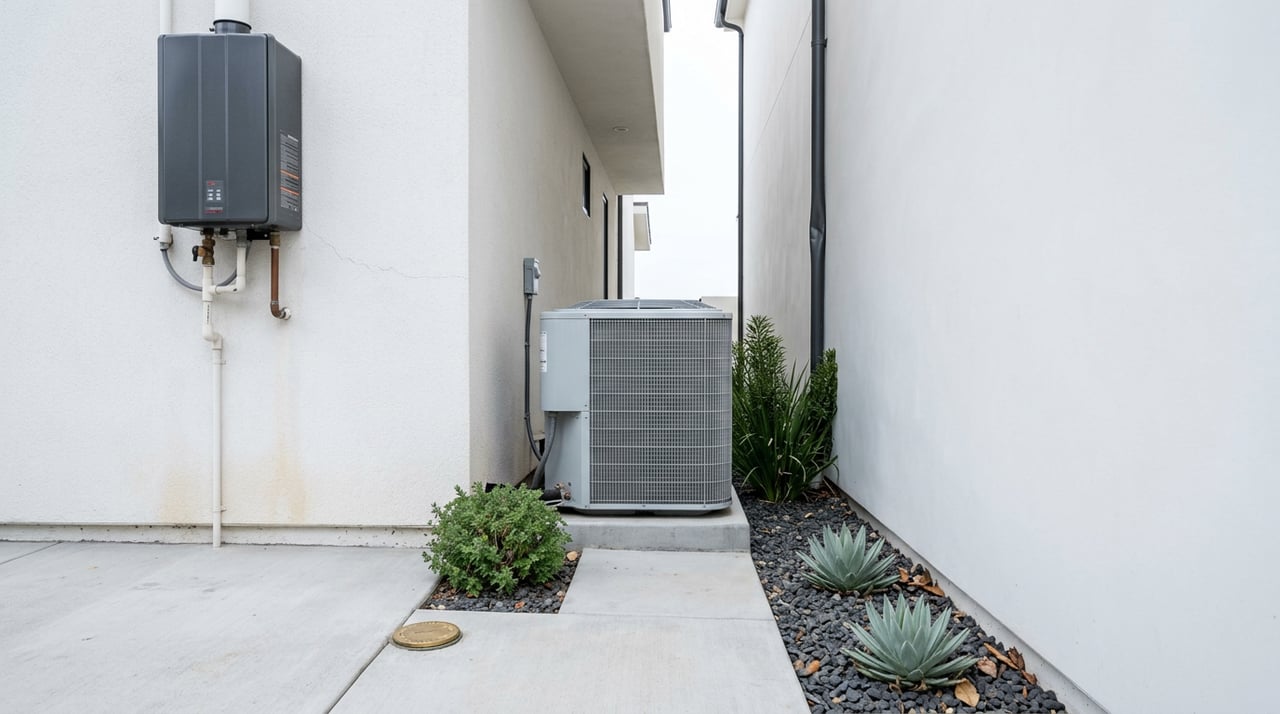
Sand Section, west of Highland. Dune sand under the foundation, salt-loaded air overhead. Coastal Commission jurisdiction applies west of Highland for exterior excavation, which means any lateral repair or foundation-adjacent work that trenches the yard adds a permitting layer the buyer's contractor will price into their bid. Expect the report to flag salt corrosion on HVAC condenser coils, exposed fasteners, exterior railings, window frames, and electrical fixtures. Behind the stucco, moisture infiltration is the finding to prepare for.
Tree Section. Compacted soil, mature street trees, and the oldest lateral runs in the city. The clay laterals that connect a sixty-year-old home to the main were not built to share ground with a mature eucalyptus or an elm. Trenchless-plumbing contractors working the neighborhood estimate root intrusion drives roughly four out of five sewer service calls in the section, and the eucalyptus on 8th Street and the elms through the named-tree grid are named repeat offenders. If the buyer's sewer scope pulls a clean video here, it is the exception, not the rule.
Hill Section. Elevation reaching 200 feet at the east edge, bedrock-laced soils, and dramatic sewer drops. Longer lateral runs and grade complications push trenchless replacement quotes above the citywide range. A residential lateral in the Sand or Tree Section usually falls in the $5,500 to $12,000 window; a Hill Section run reaches $14,000 or more when the geometry gets ugly. Grading, retaining wall drainage, and deck-to-house flashing are the other Hill Section line items to expect on the report.
The city holds a firm line on lateral responsibility. The Manhattan Beach Sewer System Management Plan states that the City does not maintain private lateral sewer lines and that property owners are responsible for both the upper and lower laterals, including the portion inside the city easement, with permits required through Public Works. When the sewer scope surfaces a break, it is your break, not the city's.
Buyers in this market are well-coached. Their inspectors arrive with a checklist tuned to the coast. Sellers should assume the report will address, at minimum:
A finding by itself is not the problem. A finding without a written repair scope and a permit path is what turns a $6,000 job into a $20,000 credit ask.
Manhattan Beach Building & Safety runs one of the stricter permit and inspection processes in the South Bay. That matters twice: once during the inspection contingency, when a buyer's contractor calls to price a repair, and again during the ensuing work.
The mechanics are unforgiving. Inspection requests must be submitted through the Citizen Self Service Portal by 3:00 PM the business day before the requested inspection, a project is capped at three inspection requests per day, and a re-inspection fee is assessed when work is not ready, approved plans are not on-site, or any deviation from the approved plans is observed. The Building & Safety line for questions is (310) 802-5533.
Tree Section work compounds the calendar. Any project that touches a city-protected tree triggers a separate Public Works review path on top of the plumbing or building permit. That review does not run on the buyer's seventeen-day clock. A buyer who learns during the contingency that a lateral replacement will require both permits will either extend the contingency, walk, or price the delay into the credit ask.
Whether that credit ask holds depends on the leverage in the room. Three data points frame the current window.
| Metric | Reading | Source window |
|---|---|---|
| Median sold price | $3,350,000 | Q1 2026, MB Confidential |
| Active listings | 69 total, 49 SFR and 20 TH | as of July 15, 2026, MB Confidential |
| Market posture | Strong upward momentum, one of the strongest South Bay markets | July 2026, Scherb Homes South Bay report |
The two readings appear to contradict. They do not. Manhattan Beach is a strong sellers' market for well-prepared homes in strong locations, and a much softer market for anything with a visible condition problem or aspirational pricing. Inventory across the South Bay is higher than it has been in the past year, which gives buyers more room to compare, negotiate, and be selective. That comparison shopping is where the inspection report becomes a pricing tool rather than a punch list.
Translated into numbers on a $3.35M base: a one percent credit is $33,500, two percent is $67,000, and the $84,000 example that opened this piece is inside the normal range for a Tree Section home with an unaddressed lateral, a marginal roof, and any moisture reading above 20 percent. Buyers do not invent those numbers. They quote contractor bids that reflect the strict permit process, the higher material spec coastal contractors recommend, and the labor to work inside the city's inspection calendar.
Sellers who order the sewer scope, the roof review, and the HVAC assessment before the sign goes in the ground are not buying peace of mind. They are pricing the property with the findings already priced in, or repairing the item and pulling it off the negotiation table before an inspector introduces it.
The pattern that produces the cleanest closings looks like this. In the Sand Section, a pre-listing salt-corrosion pass on the mechanical package and a documented moisture survey. In the Tree Section, a pre-listing sewer scope, and, where the video is ugly, a trenchless replacement completed under permit with the invoice in the disclosure packet. In the Hill Section, a drainage and retaining wall review before the buyer's structural engineer schedules a visit.
None of this is exotic. It is the same list a seasoned buyer's agent hands their inspector on day one. The only question is who orders it first.
Does Manhattan Beach require a point-of-sale sewer lateral inspection? No citywide point-of-sale requirement applies, but the private lateral remains the owner's responsibility per the city's Sewer System Management Plan, and buyers routinely order a scope during the contingency. Treat it as effectively standard.
How long does a Building & Safety re-inspection add to a repair timeline? A re-inspection is a next-business-day request when submitted by 3:00 PM. In practice, sequencing multiple corrections against the three-per-day cap and the Public Works review for tree-adjacent work is what stretches a two-week repair into six.
What is the biggest single-line risk on a coastal home report? Sewer lateral condition. It combines the largest dollar range, from roughly $5,500 to well past $14,000, with the highest probability of a finding, particularly in Tree and older Sand Section homes.
Selling or buying a Manhattan Beach home is a legal and logistical exercise as much as a pricing one. The team at Gauss Real Estate Group built its practice around the transaction detail that turns a strong offer into a clean close. Let's start the conversation today.
Stay up to date on the latest real estate trends.
Real estate is more than a transaction, it’s a journey. With a sharp eye for detail and a strategic approach, Alexandra Gauss ensures every move is smooth, smart, and successful. Let’s start the conversation today!