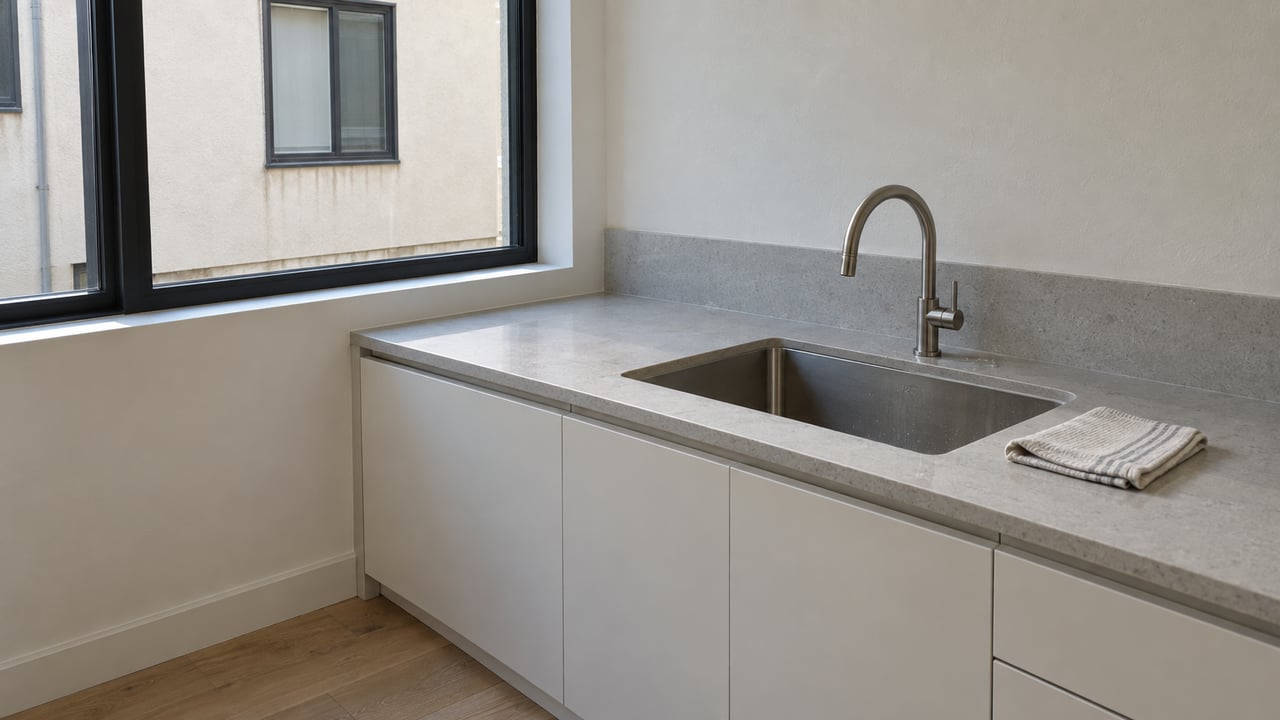
Manhattan Beach Property Tax Assessed Value: What Shapes Your Bill
October 1, 2026
October 1, 2026
In August, the City of Manhattan Beach announced that its total assessed property value had climbed to $29.07 billion for 2026, up 5.3 percent, or $1.46 billion, over the previous year. The city's statement called it proof of "a resilient local real estate market and the city's ongoing economic strength." Patch and Manhattan Beach News both picked up the number within days.
None of that is wrong. It's also not the number most homeowners or buyers think it is. Assessed value and market value are two different measurements answering two different questions, and the gap between them is where the real story sits for anyone about to close on a Manhattan Beach property or sell one.
The Los Angeles County Assessor's annual roll is an inventory, not a market report. It totals up the taxable value of every parcel in the city, land, buildings, business equipment, and reports the change year over year. Patch's coverage of the release was direct about the distinction: assessed values should not be confused with current market values or home prices.
That distinction matters because of how California taxes property. Under Proposition 13, an existing owner's assessed value can rise by a maximum of 2 percent a year, no matter what the house next door just sold for. The only way a property's assessed value jumps to something closer to true market value is when it changes hands. A sale triggers a full reassessment to the purchase price. Everything else on the roll just gets the capped inflation bump.
So when the city reports 5.3 percent growth, the honest question isn't "how much richer did Manhattan Beach get." It's "how much of that growth came from turnover versus how much came from the 2 percent cap applied to owners who never sold." Those are very different stories for a buyer weighing what a purchase actually costs.
Countywide, the Assessor's office identified two major sources of growth. The 2026 roll grew by $96 billion, or 4.42 percent, marking the 16th consecutive year of growth for Los Angeles County. Of that growth, property transfers, meaning homes and buildings that sold and were reassessed to their sale price, added $49 billion. The Proposition 13 inflation adjustment, capped at 2 percent and applied to everyone who didn't sell, added about $43 billion.
| Countywide growth source (2026 roll) | Amount added | What it actually measures |
|---|---|---|
| Property transfers (reassessed at sale) | ~$49 billion | New buyers paying tax on what they paid, not what the seller paid |
| Prop 13 inflation cap (2%) | ~$43 billion | Existing owners' tax bills nudging up regardless of market moves |
Transfers outweighed the inflation cap. More of the county's growth came from people buying and selling than from existing owners' bills creeping upward. That's the mechanism hiding inside every "assessed values rose" headline, in Manhattan Beach and everywhere else in the county.
Manhattan Beach's figure isn't just consistent with that pattern, it repeats it almost exactly. The city posted 5.3 percent assessed value growth in 2025, reaching $27.6 billion, and 5.3 percent growth again in 2026, reaching $29.07 billion. Same rate, two years running, while the countywide rate moved from 3.91 percent in 2025 (a year when the January 2025 wildfires destroyed more than 10,000 homes and 23,000 property parcels across the county) to 4.42 percent in 2026.
Manhattan Beach didn't dip when the county did and didn't accelerate when the county rebounded. It held at a flat 5.3 percent through a year the rest of the county absorbed a major shock. That's the behavior of a market where turnover, not broad appreciation, is doing most of the work: a small number of high-value sales getting fully reassessed at their sale price, year after year, regardless of what's happening elsewhere in the county.
The city's total parcel count for 2026 is 12,933, broken down as 11,175 single-family residential parcels, 1,274 apartment parcels, and 484 commercial and industrial parcels. In a roll that size, it doesn't take many multi-million-dollar closings to move the percentage. That's worth remembering the next time a headline reads like a temperature check on the whole market. It's closer to a temperature check on who sold.
For a buyer, this isn't background trivia. It's the number that determines what shows up on your first property tax bill.
When a Manhattan Beach home sells, the county doesn't inherit the seller's assessed value, the one that may have been capped at 2 percent annual growth for a decade or more. It builds a new one from your purchase price. On a $2 million purchase, that works out to roughly $22,167 a year in base property tax, or about $1,847 a month, according to the LA County Auditor-Controller's rate schedule for Manhattan Beach.
That base figure includes the county's general 1 percent levy plus the local school district's share, since Manhattan Beach Unified School District accounts for the largest local add-on to the tax bill. Layered onto that base are the district's voter-approved parcel measures: Measure MB, a school-funding parcel tax renewed by voters in March 2024 with 68.23 percent support, Measure EE, which funded a $39 million gymnasium replacement at Mira Costa High School with 67.4 percent voter approval, and Measure RLS, approved in November 2024 to fund a $200 million school facilities bond. According to MB Confidential, recently approved bond repayments like these can add roughly $1,465 a year on a $2 million purchase, on top of the base figure, bringing the realistic annual total closer to $23,600.
One number worth knowing for context: Manhattan Beach is not subject to the City of Los Angeles's Measure ULA transfer tax, the so-called mansion tax that applies to high-value sales within LA city limits. A high-value Manhattan Beach closing doesn't carry that added transfer cost.
The same reassessment rule that resets a buyer's tax bill is exactly what a long-tenured owner is protecting when they hesitate to sell. If you've owned a Manhattan Beach home for twenty years, your assessed value has likely grown at 2 percent annually while the market value grew far faster. Selling and buying something else at today's prices means giving up that gap and starting over at full market value, unless you qualify for a specific exception.
Proposition 19 is that exception. It lets homeowners 55 or older, along with certain disabled owners and disaster victims, transfer their existing assessed value to a replacement home anywhere in California, up to three times over their lifetime. The filing has to happen within the required window after the sale. For a Manhattan Beach owner considering a move, whether downsizing within the South Bay, relocating for family, or restructuring an estate, this is the mechanism that determines whether a sale resets the tax clock or preserves decades of accumulated savings. It's a genuinely different calculation than the one a first-time buyer is running, and it's worth a conversation with a tax professional before a listing goes live.
The January 2025 wildfires that pulled down the countywide growth rate also opened a specific reassessment path for anyone whose property was damaged or destroyed in that Governor-declared disaster. Owners in that position may qualify for immediate reassessment of the damaged property and can transfer their base year value to a replacement home, rather than absorbing a full reassessment on the rebuild. The starting point for that process is the LA County Assessor's disaster relief program, and the filing deadlines are specific enough that it's worth confirming directly with the Assessor's office rather than assuming a general timeline applies.
The takeaway across all of this is the same one that shows up every time a city or county publishes an aggregate number. A 5.3 percent increase describes the roll, not any one household's bill. What actually determines your number is whether you bought, when you bought, and whether you qualify for one of the specific transfers built into California's tax code. Anyone can look up a parcel's current assessed value directly through the LA County Assessor's public portal before making an offer or listing a home.
If you're weighing a purchase, a sale, or a Proposition 19 transfer in Manhattan Beach and want the tax mechanics worked through before you're staring at a closing statement, that's exactly the kind of groundwork Gauss Real Estate Group handles alongside the transaction itself. Let's start the conversation today.
This article is general information, not legal, tax or financial advice. Consult a qualified professional about your situation.
Stay up to date on the latest real estate trends.
Real estate is more than a transaction, it’s a journey. With a sharp eye for detail and a strategic approach, Alexandra Gauss ensures every move is smooth, smart, and successful. Let’s start the conversation today!