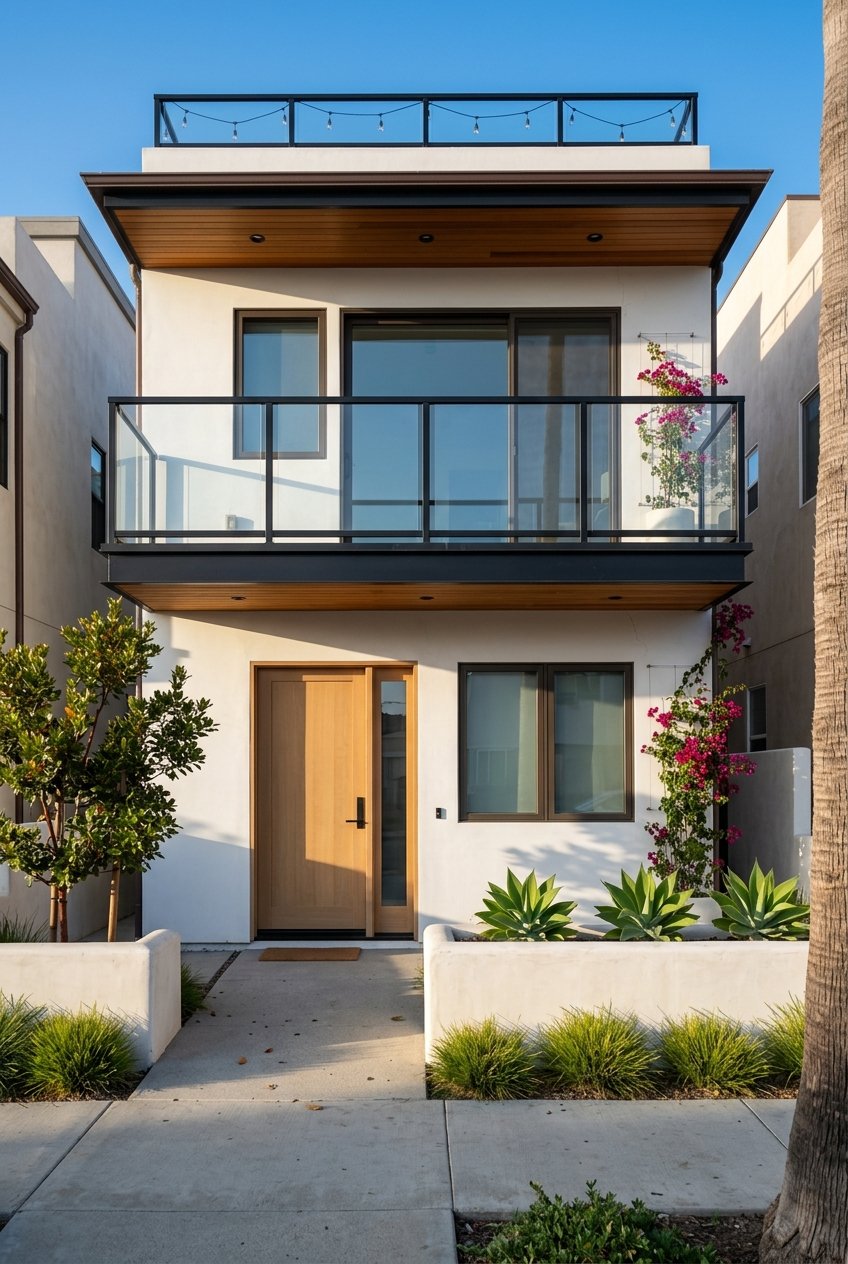
Manhattan Beach Micro-Neighborhoods And Their Personalities
June 18, 2026
June 18, 2026
If you have spent any time looking at Manhattan Beach homes, you already know one thing: not every part of this small coastal city feels the same. A few blocks can change your day-to-day routine, your parking reality, and how close you feel to the beach, shops, or quieter residential streets. This guide will help you understand the personalities of Manhattan Beach micro-neighborhoods so you can narrow your search with more confidence. Let’s dive in.
Manhattan Beach covers about 4 square miles with roughly 2.1 miles of beachfront, but the city and its planning documents break it into smaller areas and neighborhood pockets. Official planning areas include the Beach Area, Hill Section, East-Side/Manhattan Village, Tree Section, and El Porto.
The city’s history and neighborhood references also include names like Sand Section, Downtown, North End, Gas Lamp Section, The Village, Manhattan Heights, East Manhattan Beach, Liberty Village, and Poet’s Section. For you as a buyer, seller, or investor, these labels matter because they often signal different street patterns, home types, density, and access to daily conveniences.
Downtown Manhattan Beach is the city’s most compact and pedestrian-oriented pocket. It is the commercial heart of the city, with shopping, dining, the Pier, and nearby services grouped closely together.
A defining feature here is the walkstreet network. In the Downtown area, the city identifies pedestrian-only east-west walkstreets on parts of 15th, 14th, 12th, and 11th Streets from The Strand to Ocean Drive, plus portions of 13th and 10th Streets from The Strand to Highland Avenue, and 9th Street from The Strand to Manhattan Avenue.
That layout creates one of the most village-like settings in Manhattan Beach. If you want a neighborhood where walking is part of everyday life, Downtown stands out.
At the same time, the adjacent Beach Area includes many small lots, much of the city’s multi-family rental housing, and tighter parking conditions. In practical terms, that often means a lively environment with strong beach access, but also more traffic and parking pressure, especially during busy seasons.
North Manhattan Beach and El Porto have a distinct identity within the city. Manhattan Beach describes North Manhattan Beach as a laid-back, family-friendly surf community, and highlights El Porto Beach, The Strand, walkstreets, and the cluster of businesses along Highland Avenue.
That business mix includes coffee shops, cafes, pubs, restaurants, bars, accommodations, and services. Official housing materials also describe El Porto as the former unincorporated area north of 38th Street, between the ocean and El Segundo, with a mix of residential and commercial uses.
The city notes that El Porto has the highest residential development intensities in Manhattan Beach. For you, that often translates into a more active, mixed-use, beach-first atmosphere than some other coastal pockets in town.
Bruce’s Beach is one of the smallest but most recognizable pockets in Manhattan Beach. The city identifies Bruce’s Beach Park as the only park space west of Sepulveda Boulevard and south of Manhattan Beach Boulevard, and notes that it occupies one city lot, about two-tenths of an acre.
The city’s parking program also identifies the 26th Street Lot as Bruce’s Beach. Nearby, city parking guidance refers to the Dune Section as an area with public parking pads in the right-of-way, alongside the Sand and Tree sections.
These details point to a pocket that feels intimate and beach-adjacent rather than commercially busy. If you are drawn to smaller-scale streets and a more tucked-in coastal setting, this area can feel very different from Downtown or the North End.
The Tree Section is one of Manhattan Beach’s clearest residential identities. The city defines it as the single-family area east of Bell Avenue and northwest of Valley Drive.
The neighborhood’s name is reinforced by the city’s history with tree preservation. Earlier city documents note that the Tree Preservation Ordinance originally applied only to the Tree Section before expanding citywide.
The city also maintains a Tree Section resident permit parking program. Together, those facts support what many people already sense when they drive through: this pocket reads as leafy, quieter, and more residential, with less commercial activity than the beach core.
The Hill Section has a different rhythm from the beach neighborhoods. According to the city’s housing element, it is primarily single-family, while commercial and higher-density residential uses are largely limited to Sepulveda Boulevard and Manhattan Beach Boulevard.
The city also notes that lot sizes in the Hill Section are slightly larger than in the Beach Area. That may not sound dramatic on paper, but in a compact city, those differences can shape how a block feels.
If you are looking for a neighborhood that feels more set apart from the retail energy of Downtown, the Hill Section often fits that description. It reads as a more traditional inland district with a stronger single-family pattern.
East Manhattan, Manhattan Village, and Liberty Village offer a different kind of convenience. The city’s housing element says the East-Side/Manhattan Village area includes all land east of Sepulveda Boulevard, along with a large share of the city’s commercial and residential uses.
It also includes medium- and high-density housing along Manhattan Beach Boulevard and Artesia Boulevard. Manhattan Village adds regional commercial and office development plus condominium units.
The city’s mobility plan notes that Manhattan Village, Liberty Village, East Manhattan Beach, and the Hill Section are primarily served by a sidewalk system rather than the beach walkstreet network. That tells you something important about how these neighborhoods function day to day.
Liberty Village is a 400-home tract bounded by Redondo Avenue, Aviation Boulevard, Marine Avenue, and Manhattan Beach Boulevard, and the city says its streets were originally built in the 1950s. Altogether, East Manhattan tends to feel more grid-based, practical, and errand-friendly than the shoreline pockets.
One of the most interesting things about Manhattan Beach is how many very small character areas exist beyond the better-known sections. City design overlays identify several sub-areas with specific standards that help preserve their existing character.
The Gaslamp neighborhood has special standards aimed at preserving neighborhood character. North End Commercial runs along Highland Avenue and Rosecrans Avenue between 33rd and 42nd Streets and is described as a small-scale area with neighborhood-serving service businesses, retail, and offices.
Oak Avenue is identified as a place where commercial parcels are buffered from a predominantly single-family street. The Longfellow Drive area includes Longfellow Drive, Ronda Drive, Terraza Place, Duncan Drive, and Kuhn Drive, where larger minimum lot area requirements and anti-subdivision rules help preserve character, views, and privacy.
These details are a strong reminder that Manhattan Beach is not just beach versus inland. In a city this compact, even small zoning overlays can shape the look, feel, and use pattern of a few key blocks.
The best Manhattan Beach neighborhood for you depends less on a broad label and more on how you want your daily life to work. In many cases, the biggest differences come down to walkability, lot size, housing mix, parking, and how close you want to be to the shoreline or commercial areas.
If you want the most pedestrian-oriented setting, Downtown and the walkstreets stand out. If you want a more active surf-forward environment, North Manhattan Beach and El Porto often rise to the top.
If a smaller-scale coastal setting appeals to you, Bruce’s Beach and nearby pockets may be worth a closer look. If you prefer a more residential atmosphere, the Tree Section and Hill Section usually offer a different pace.
And if your priority is practical access to services, a broader housing mix, and more everyday convenience, East Manhattan, Manhattan Village, and Liberty Village deserve attention. In a market as nuanced as Manhattan Beach, understanding these micro-neighborhoods can help you search smarter, price more accurately, and make a better long-term decision.
If you want help matching your goals to the right pocket of Manhattan Beach, Gauss Real Estate Group (Alex Gauss) brings neighborhood-level insight, high-touch guidance, and a process-driven approach to every move.
Stay up to date on the latest real estate trends.
Real estate is more than a transaction, it’s a journey. With a sharp eye for detail and a strategic approach, Alexandra Gauss ensures every move is smooth, smart, and successful. Let’s start the conversation today!