Value-Add Property vs Rent-Ready in Manhattan Beach
May 28, 2026
May 28, 2026
If you are weighing a Manhattan Beach investment, one question can shape almost everything that follows: do you want a property that can start producing income quickly, or are you willing to take on more work for more upside? In a high-cost, tightly built coastal market, that choice matters more than many buyers expect. The right answer depends on your timeline, risk tolerance, and how much complexity you want to manage. Let’s dive in.
Manhattan Beach is not a market where small mistakes are easy to absorb. Census QuickFacts reports a 2020 to 2024 owner-occupied housing unit rate of 64.8%, a median gross rent of $3,449, and a median value of owner-occupied housing units of $2,000,000+. That mix points to a high-value market where both acquisition costs and carrying costs deserve careful planning.
It is also a city with limited room to expand. Manhattan Beach’s housing element says the city is nearly built out, with very few vacant sites, and that most future housing capacity comes from underutilized commercial areas rather than raw land. For investors, that usually means opportunities are more often about improving existing property than creating something entirely new.
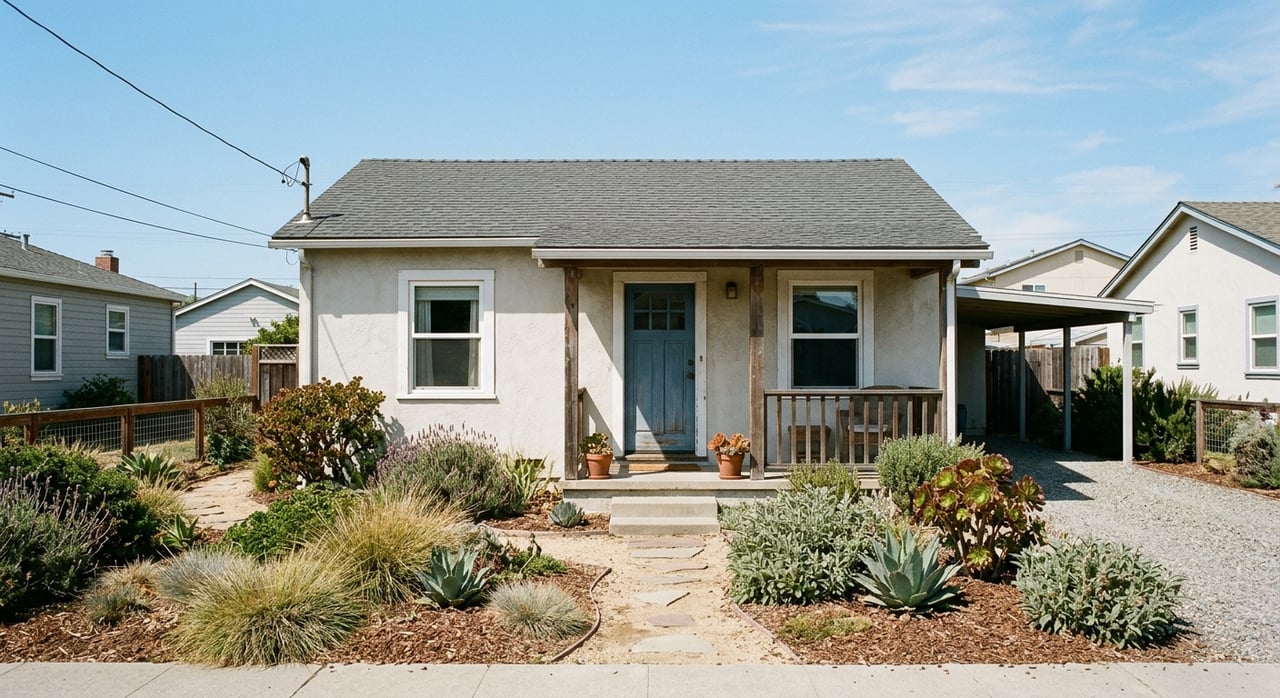
In Manhattan Beach, rent-ready usually refers to a property that can be leased with minimal delay because it is already in workable condition. It may need a cosmetic refresh, minor maintenance, safety cleanup, or basic turnover work, but not a major construction plan. This is an investor shorthand, not a legal category.
A rent-ready asset here is often a well-kept condo, townhome, or smaller single-family home. Typical work may include:
Because the work scope is lighter, the path to market is often simpler. For many buyers, that means fewer moving parts between closing and lease-up.
In Manhattan Beach, value-add usually means a property with upside tied to more substantial work. That could involve updating kitchens and baths, changing a layout, upgrading systems, creating additional legal living space, or pursuing an accessory dwelling unit where allowed.
This strategy often shows up in older duplexes, triplexes, fourplexes, small apartment buildings, or dated single-family homes. The tradeoff is clear: you may gain a stronger income profile or more marketable finished product, but you also take on more permit, construction, tenant, and timeline risk.
In this market, value-add is often less about dramatic transformation and more about disciplined repositioning. Since the city is built out, the best opportunities frequently come from improving what is already there rather than expecting a ground-up redevelopment play.
Rent-ready investments in Manhattan Beach often include condos, townhomes, and smaller detached homes that have been maintained well enough to lease without heavy work. These properties tend to appeal to investors who want a faster start and a more predictable renovation budget.
They can also make sense if you do not want to spend your first months of ownership managing contractors, permit questions, and change orders. In a market with high acquisition prices, simplicity can be a real advantage.
Value-add opportunities often show up in older multifamily properties and dated homes with a clear improvement path. The city’s housing element notes that Manhattan Beach is dominated by single-family detached homes, with smaller shares of attached homes, duplexes, triplexes, fourplexes, and larger apartment buildings. It also notes that coastal areas contain a larger proportion of duplexes and multifamily housing than other parts of the city.
That matters because property type often shapes your options. A multifamily building may offer repositioning potential through unit upgrades or operational improvements, while a single-family home may be better suited to a targeted renovation or ADU strategy if the site and zoning support it.
One of the biggest differences between a solid value-add deal and a frustrating one in Manhattan Beach is the permit path. The city states that projects in the Coastal Zone require a Coastal Development Permit unless exempt. The housing element also notes a 30-foot coastal-zone residential height limit, along with related parking and scale policies.
For investors, this means your upside is not just about design ideas or rent assumptions. It is about whether your plan fits within the actual permit envelope. A project that seems straightforward on paper can become much more complex if coastal review, height limits, or parking issues come into play.
That is why many buyers here benefit from evaluating the renovation scope before they get attached to the projected return. In Manhattan Beach, feasibility can be just as important as vision.
Accessory dwelling units can be part of a value-add strategy in Manhattan Beach, but they require careful review. The city updated its ADU and JADU rules in April 2025. ADUs are permitted on lots zoned for single-family or multi-family residential use, and JADUs are permitted on lots zoned for single-family residential use.
The city also notes that this applies regardless of whether the parcel is in the Coastal Zone, though coastal-zone ADU and JADU proposals were still subject to state law until the city’s Local Coastal Program amendments receive Coastal Commission certification. In practical terms, that means an ADU concept may be promising, but you still need to verify how the rules apply to the specific property you are considering.
If you are comparing rent-ready and value-add, rental regulations matter most when your strategy relies on timing. California’s Tenant Protection Act generally applies to most residential rental properties more than 15 years old. It caps annual rent increases at 5% plus CPI or 10%, whichever is lower, and requires just cause for termination after a tenant has occupied the unit for 12 months.
The law also says certain no-fault terminations require relocation assistance. For value-add investors, those rules can affect your renovation schedule, turnover assumptions, and lease-up strategy. A deal may still work well, but only if your planning reflects the actual operating framework.
There are also important exemptions to check. The Attorney General’s guidance says the law does not apply to some property types, including certain single-family homes and condominiums if they are not owned by a REIT, corporation, or qualifying LLC and if the required written notice is given. It also does not apply to a two-unit property where the owner lives in one unit during the tenancy.
In other words, you do not want to guess. The exact property type, ownership structure, and notice history can materially affect your assumptions.
Some investors start with a vacation-rental mindset, but Manhattan Beach has specific short-term rental rules. The city states that rentals under 30 days are banned in residential zones, that the ban remains outside the Coastal Zone, and that short-term rentals within the Coastal Zone must obtain a business license and remit transient occupancy tax.
That is one reason long-term rent-ready and value-add strategies are usually the more relevant conversation in Manhattan Beach. If you are underwriting a deal, it makes sense to focus on the long-term rental framework rather than assume a broad short-term rental option exists citywide.
The better strategy often comes down to your personality as much as your numbers.
Rent-ready assets can be especially appealing in Manhattan Beach because they reduce exposure to permit delays and construction surprises. In a high-cost market, avoiding unnecessary complexity can protect both your time and your capital.
Value-add can still be compelling here, but it usually rewards disciplined planning rather than aggressive assumptions. The best opportunities often come from knowing exactly where you can add value and where local rules set real limits.
Before you choose one path over the other, it helps to compare properties through a simple lens:
| Factor | Rent-Ready | Value-Add |
|---|---|---|
| Lease-up timing | Usually faster | Usually slower |
| Renovation scope | Light | Moderate to substantial |
| Permit exposure | Lower | Higher |
| Construction risk | Lower | Higher |
| Capital needs | More predictable | Less predictable |
| Management intensity | Lower | Higher |
| Upside potential | More limited | Often higher, if executed well |
This kind of side-by-side review can keep you focused on what actually matters in Manhattan Beach. In a built-out coastal market, a deal is not just about the asking price. It is about how quickly and confidently you can move from purchase to performance.
There is no universal winner between rent-ready and value-add. A rent-ready property can be the smarter investment if your goal is stable, near-term income with fewer operational headaches. A value-add property can be the stronger play if you have the patience, liquidity, and local understanding to manage complexity well.
In Manhattan Beach, that decision deserves a local lens. Built-out land supply, coastal permitting, ADU rules, and California rental law can all affect whether a property performs the way you expect. If you want help evaluating the real tradeoffs behind a specific condo, home, or multifamily opportunity, start the conversation with Gauss Real Estate Group (Alex Gauss).
Stay up to date on the latest real estate trends.

Real estate is more than a transaction, it’s a journey. With a sharp eye for detail and a strategic approach, Alexandra Gauss ensures every move is smooth, smart, and successful. Let’s start the conversation today!