Comparing New Construction and Resale in Manhattan Beach
May 21, 2026
May 21, 2026
If you are deciding between a brand-new home and an older property in Manhattan Beach, you are really making a choice about time, flexibility, and how much project risk you want to take on. In a small, high-cost coastal market where many homes sit on valuable parcels, the decision is rarely just about finishes or curb appeal. This guide will help you understand how new construction and resale homes compare in Manhattan Beach so you can choose the path that fits your goals. Let’s dive in.
Manhattan Beach is a compact market with only about 3.93 square miles of land area, and it is densely built with more than 9,000 people per square mile. The city also has a high owner-occupancy rate, and Census data places the median value of owner-occupied homes at $2,000,000+ for 2020 through 2024. In spring 2026, market trackers like Redfin and Zillow place typical values in the low-$3M range.
That price level changes how many buyers think. In Manhattan Beach, you are often weighing land value, rebuild potential, and renovation cost alongside the home itself. Instead of asking only, “Do I like this house?” buyers are often asking, “Is this the right finished home for me, or is this really a lot with future potential?”
A big reason resale homes stay central to the market is that much of the housing stock is older. SCAG reports that 77.1% of housing units were single-family detached in 2018, and 57.2% of the housing stock was built before 1970.
That means many resale homes are not just dated in style. They may also raise practical questions about systems, layout, and whether a remodel or rebuild makes more sense long term. In Manhattan Beach, an older home can be a move-in opportunity, a renovation candidate, or a future redevelopment play.
One of the biggest advantages of new construction is that it is built to current standards. Manhattan Beach is using the 2025 California Building Standards Code set, effective January 1, 2026.
For you, that usually means newer major systems, current energy-code compliance, and a lower chance of facing immediate maintenance projects after closing. If you want a home that feels turnkey from both a design and infrastructure standpoint, new construction often checks that box more cleanly than resale.
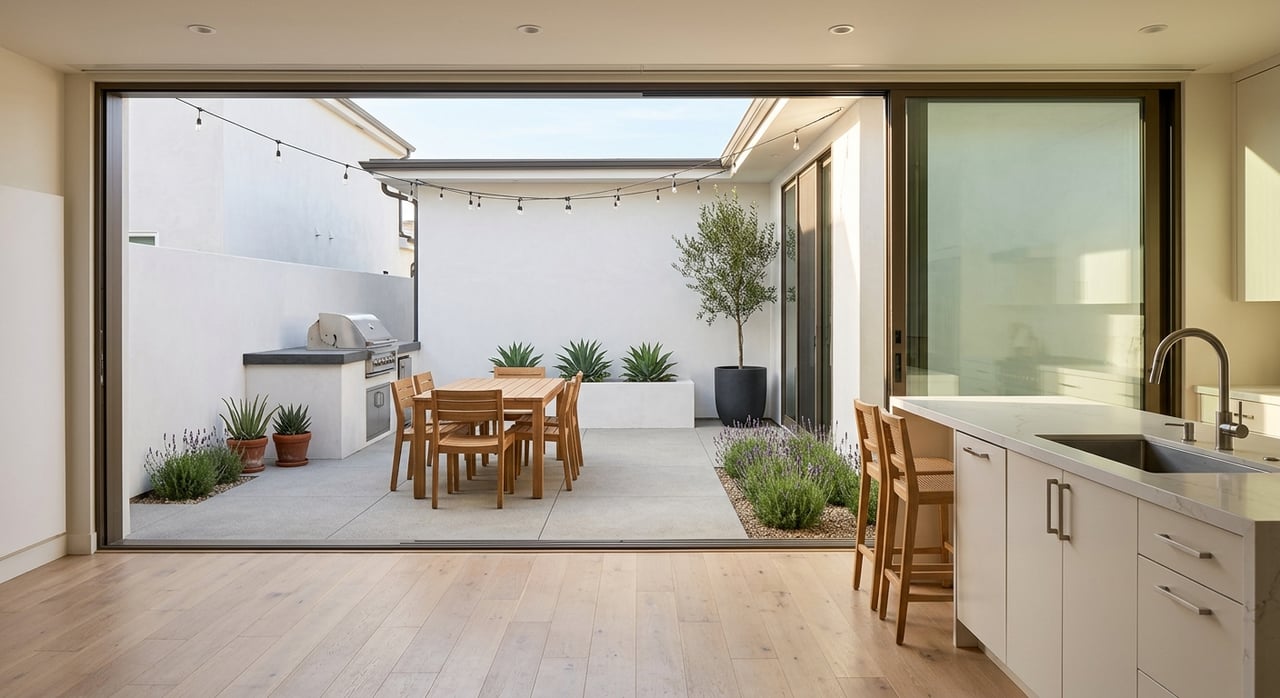
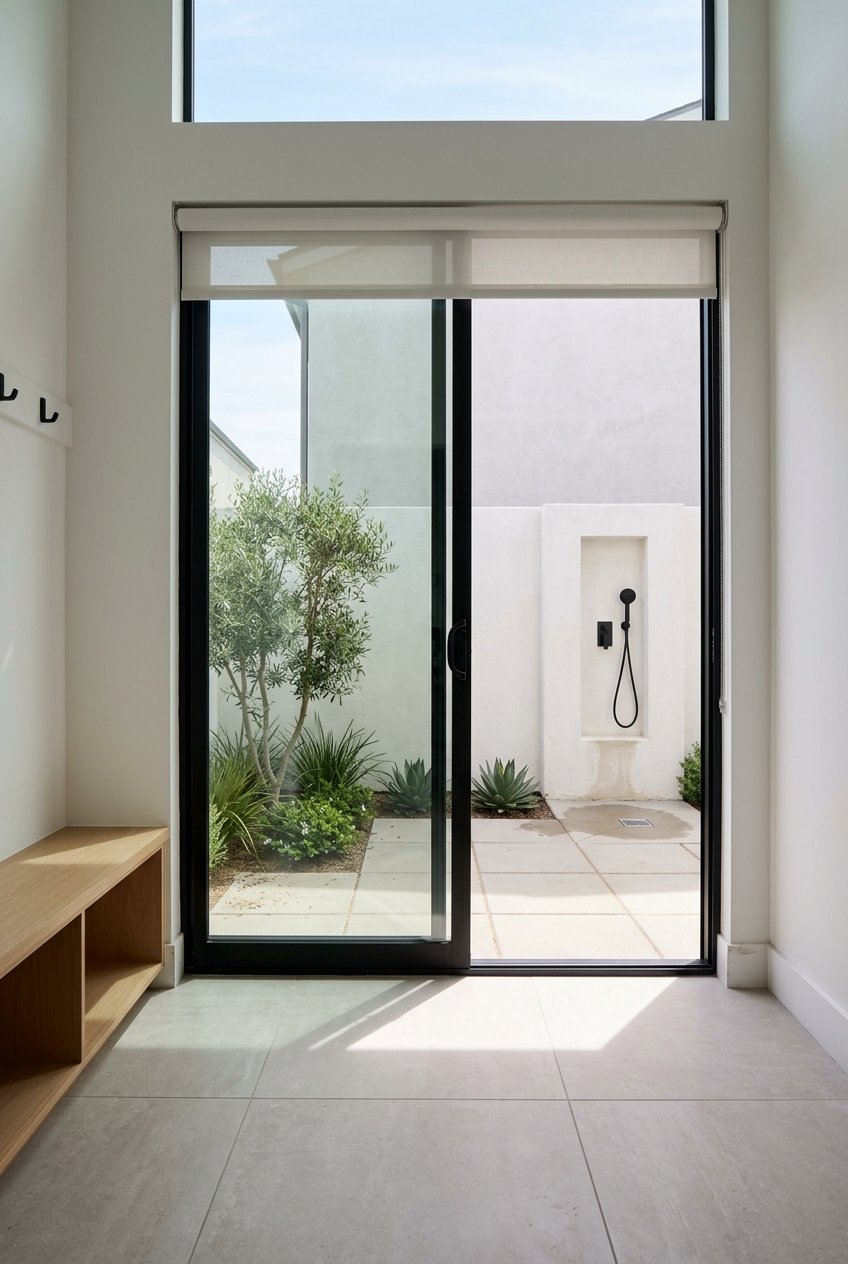
Newer homes also tend to align with what many Manhattan Beach buyers value right now. Spring 2026 Redfin feature data shows premiums tied to features like French doors, cathedral ceilings, glass sliding doors, dens, and lanai-style spaces.
That pattern suggests buyers are rewarding light, volume, and indoor-outdoor flow. Those features are often easier to achieve in a newly built home or one that has been extensively remodeled.
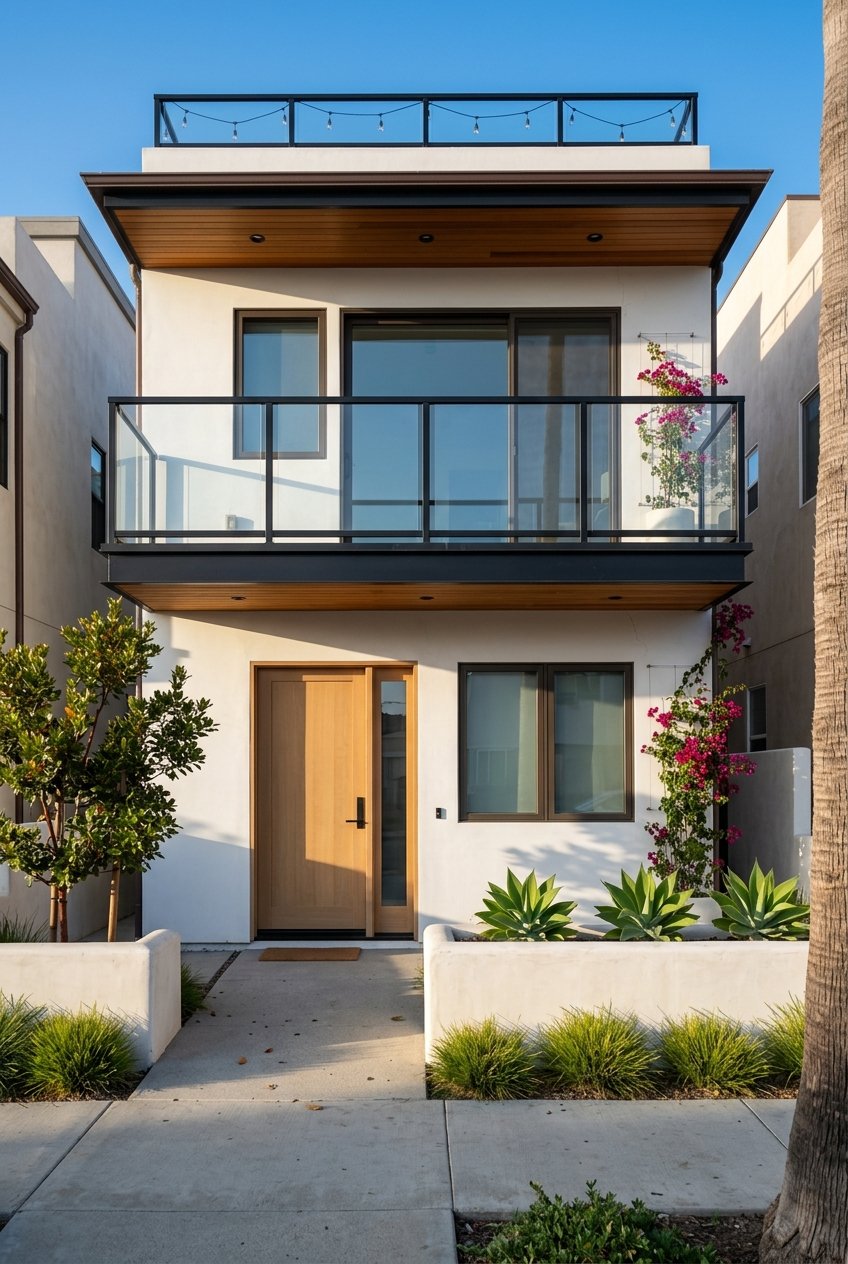
If you want to shape the home around your preferences from the start, new construction is usually the cleaner route. You can prioritize room placement, ceiling height, storage, finish level, and how the house connects to outdoor space.
That level of control matters in Manhattan Beach, where lot shape and orientation can have a major effect on design. A new build gives you a chance to make those decisions intentionally instead of trying to work around an older footprint.
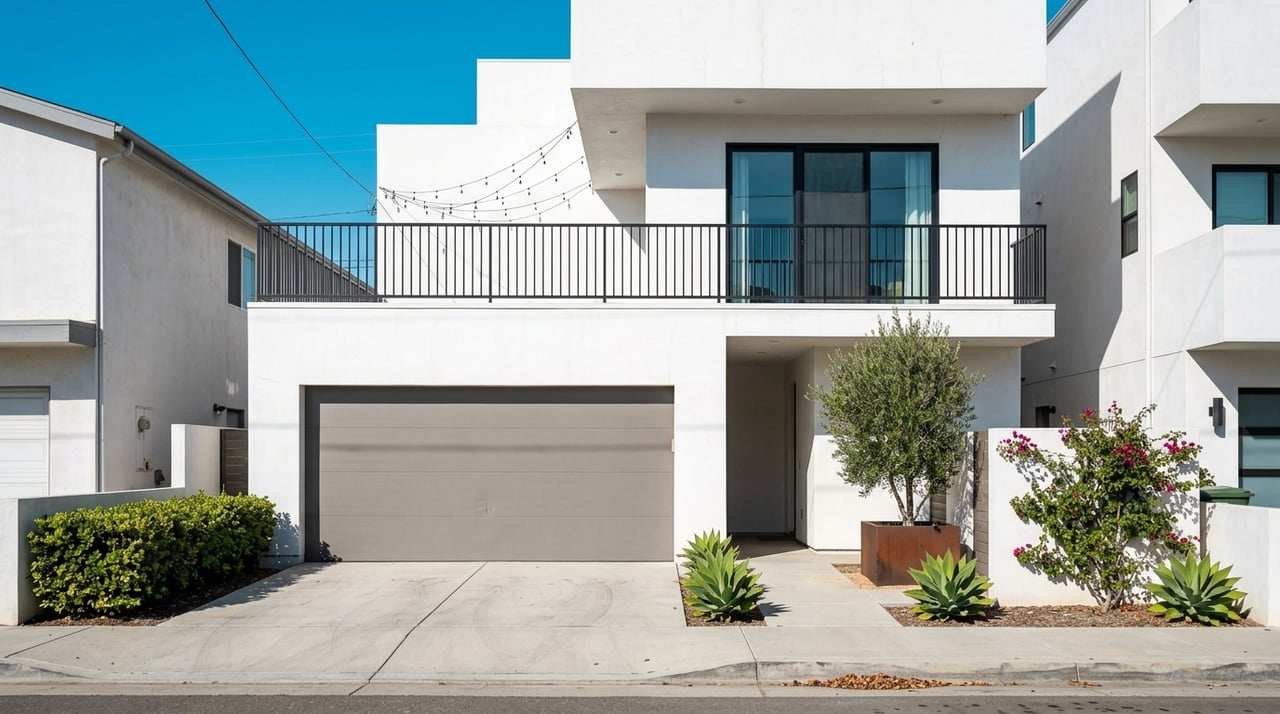
New construction in Manhattan Beach is not unlimited. Current city standards for single-family residential development include a maximum lot coverage of 50%, a maximum height of 26 feet, and setback requirements that vary by street type.
City materials also address parcel-specific issues like lot width, lot depth, building height, and driveway clearances. In practical terms, that means the quality of a new-construction opportunity is not just about square footage. The lot itself, including its shape and orientation, can strongly affect what can be built.
A straightforward single-family rebuild in Manhattan Beach is generally handled administratively, which removes some uncertainty compared with a process requiring public hearings or separate design review. Still, it is not instant.
City materials state that projects in the Coastal Zone must obtain a coastal permit unless exempt or excluded, and the city can process its own coastal permits through its certified Local Coastal Program. Current housing-element materials describe Coastal Development Permit review as taking roughly 8 to 10 weeks.
Timing matters if you are considering a rebuild or major improvement. Manhattan Beach notes that submitted plan checks expire if no permit is issued within 12 months, and issued permits expire if work does not begin within 12 months.
Inspections also cannot begin until the permit is approved and issued. So while new construction may offer the best long-term fit for some buyers, it usually works best when you can tolerate a permit-and-build timeline.
For many buyers, resale is the fastest way to live in Manhattan Beach. Because vacant land is limited in such a small, built-out coastal city, many opportunities come through existing homes rather than blank-slate development sites.
If your priority is getting into the market without waiting through design, permitting, and construction, resale may be the better fit. That speed can be especially valuable in a high-demand market where timing often matters.
Another benefit of resale is that you can evaluate the home in its current setting from day one. You can see the street, lot placement, neighboring structures, and the way the home functions as part of the surrounding block.
That can be helpful if you value existing neighborhood context more than full customization. In Manhattan Beach, many buyers appreciate the ability to assess the parcel and the home together before deciding whether the current structure is the final product or just the starting point.
Older homes can also create opportunities for improvement. Because so much of the city’s stock predates 1970, many resale purchases come with some level of update potential.
City redevelopment policies reinforce this idea. Manhattan Beach’s Residential Overlay District materials note that eligible sites were selected in part because they were underbuilt, had low land-to-improvement ratios, or had buildings more than 30 years old. That is a strong signal that older parcels may carry redevelopment potential, even if the current home is usable today.
A resale purchase does not always mean you avoid the city process. Manhattan Beach requires permits for construction, repair, remodel, alteration, and demolition work, including items such as re-roofing, window retrofit projects, and plumbing, mechanical, or electrical improvements.
So if you buy an older home with plans to make meaningful changes, permitting can quickly become part of your timeline. That is one reason the resale-versus-new-construction choice in Manhattan Beach is often more connected than it first appears.
With older Manhattan Beach homes, the key issue is often not whether resale is better or worse. It is whether the existing structure is the home you want to keep, improve, or eventually replace.
That makes due diligence especially important. In this market, resale homes can fall into two broad buckets: homes that meet your needs with limited updates, and homes where the land and future building potential are a major part of the value.
In Manhattan Beach, buyers often compare the premium for a finished, current-code home against the cost of buying older and improving later. With typical values in the low-$3M range and much of the housing stock aging, that is a practical budgeting decision.
A new or nearly new home may require a higher upfront purchase price. A resale home may offer a different entry point, but future design, permit, and construction costs can change the total picture.
If you want to move in quickly, resale is usually the simpler path. If you are comfortable with a longer timeline and want a home tailored to your needs, new construction may be worth the wait.
The important thing is to match the property type to your real schedule. In Manhattan Beach, that timing difference is not minor. It can shape your costs, your stress level, and how quickly the home serves your lifestyle.
New construction is usually best when you want control over layout, systems, and finish choices from the beginning. Resale tends to make more sense when you prefer an existing home, want to avoid the full build process, or are open to gradual improvements.
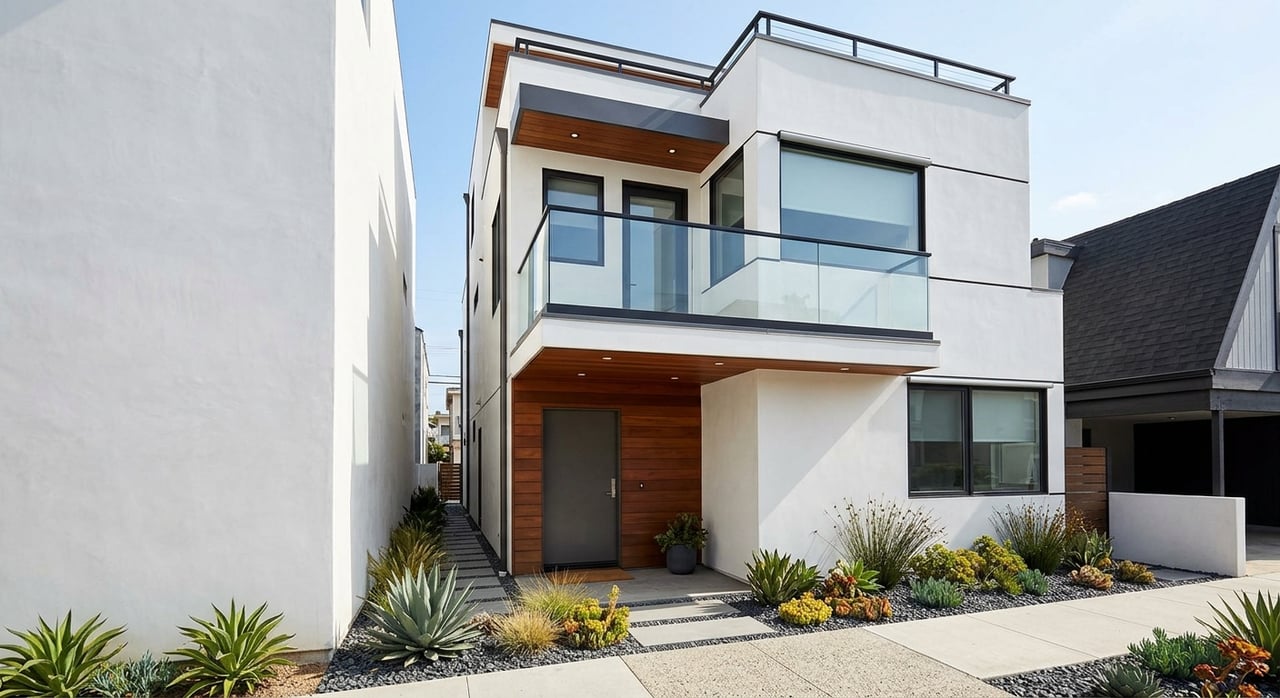
A simple local way to think about it is this: new construction in Manhattan Beach is about fitting a modern home onto a tightly regulated coastal parcel, while resale is about deciding how much of the existing house you want to keep versus replace.
Choosing between new construction and resale in Manhattan Beach is rarely about one option being universally better. It is about how you want to spend your time, where you want flexibility, and whether you are buying a finished home or a future project. With so many older properties in a tightly regulated coastal market, the smartest move is to evaluate the home, the lot, and your timeline together before making a decision.
If you want help comparing specific properties, redevelopment potential, or the trade-offs between turnkey and value-add opportunities, Gauss Real Estate Group (Alex Gauss) can help you navigate the Manhattan Beach market with local insight and a clear, process-driven approach.
Stay up to date on the latest real estate trends.
Real estate is more than a transaction, it’s a journey. With a sharp eye for detail and a strategic approach, Alexandra Gauss ensures every move is smooth, smart, and successful. Let’s start the conversation today!