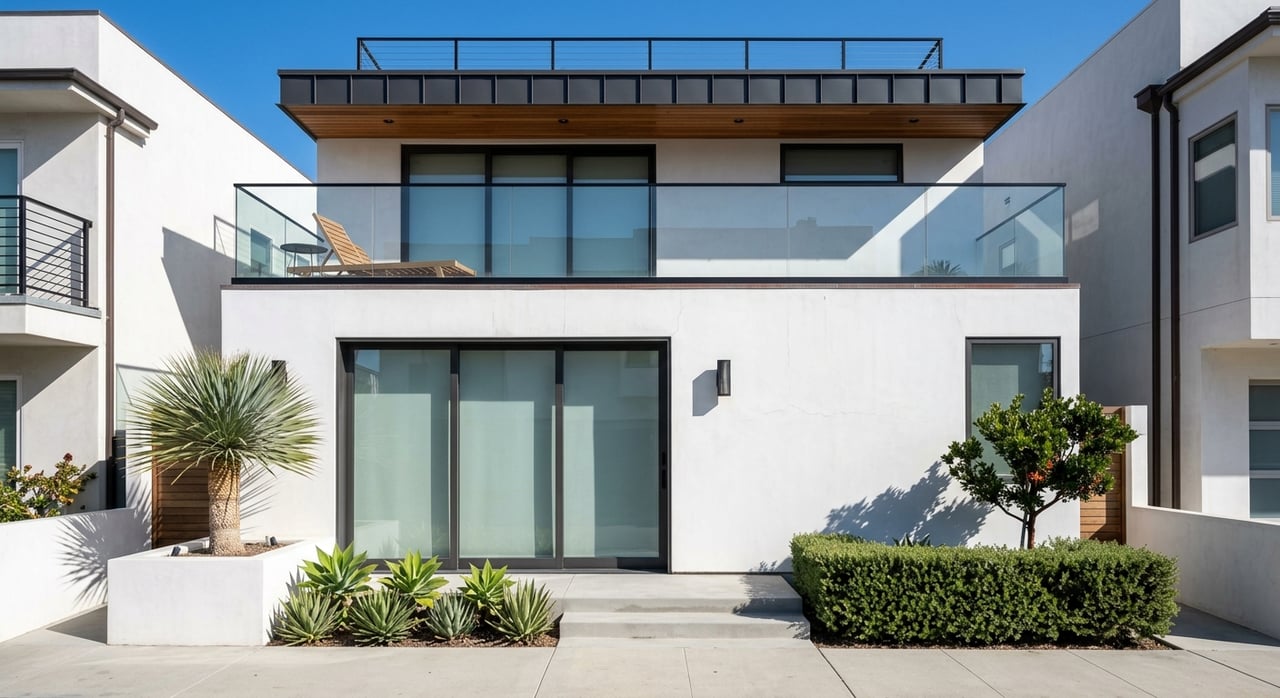
Smart Pricing Strategies for Manhattan Beach Luxury Homes
April 2, 2026
April 2, 2026
Wondering why one Manhattan Beach luxury home draws strong offers while another sits, even when both look impressive online? In a market where median sale prices are measured in the millions and pricing can shift dramatically by section, the difference often comes down to strategy, not just square footage. If you are preparing to sell, understanding how buyers evaluate location, views, condition, and timing can help you avoid costly missteps. Let’s dive in.
Luxury pricing in Manhattan Beach is not a citywide math problem. It is a micro-market exercise shaped by section, street pattern, view exposure, and the quality of competing inventory.
That matters because broad market averages can blur major differences. According to Redfin’s Manhattan Beach housing market data, the median sale price was about $4.0 million as of February 2026, while Realtor.com market data for Manhattan Beach put the median home sale price at $4.25 million. Those numbers confirm the market’s high price point, but they do not tell you what your specific home should command.
The better question is this: Which buyers will compare your property to which other homes? That is where an effective pricing strategy starts.
In Manhattan Beach, section-level pricing can vary by millions. Realtor.com’s neighborhood data shows median home prices around $5.699 million in the Sand Section, $3.825 million in the Tree Section, $2.649 million in Eastside Manhattan Beach, and $8.3725 million in the Hill Section, with days on market also varying meaningfully by area. That spread is a clear sign that citywide averages are too broad for luxury pricing.
If your home is in the Tree Section, pricing it off a city median or a sale from the Hill Section can mislead you. Buyers in this segment tend to know the submarkets well, and they quickly notice when a home is priced against the wrong benchmark.
A sound comp set should usually focus on homes that match your property as closely as possible in:
Price per square foot can help, but it should not lead the valuation. Luxury buyers do not purchase homes the way they buy commodities, and two homes with similar square footage can trade at very different prices depending on layout, light, privacy, outdoor space, and views.
A 2025 Douglas Elliman micro-market report placed Manhattan Beach’s citywide average price per square foot around $1,470, while showing meaningful submarket variation, including roughly $1,048 per square foot in Mira Costa and about $1,517 in Tree. The lesson is simple: use price per square foot to test your conclusion, not to create it.
For a luxury seller, that means your agent should first narrow the comp set, then use price per square foot as one of several reality checks. If you start with a broad average and work backward, it is easy to miss the mark.
In coastal markets, views matter, but not all views carry the same premium. A panoramic ocean view, a partial water view, and a protected sightline should never be treated as interchangeable.
Research on coastal housing shows that water-view premiums can rise and fall with market conditions, and broader coastal factors such as shoreline proximity, beach width, and beach views can influence value. In practice, that means view claims need to be supported by actual sold comparables, not optimistic marketing language.
When pricing a luxury home in Manhattan Beach, view adjustments should consider:
This is one reason luxury pricing often rewards precision over speed. A small overstatement in view value can push a listing outside the range buyers see as credible.
In an affluent market, presentation and condition matter more than many sellers expect. Census Reporter data for Manhattan Beach shows a median household income of $204,306 and high educational attainment, which supports the broader point that many buyers here have the means and expectations to be selective.
That does not mean every home needs a full renovation before listing. It does mean buyers often notice design quality, finish consistency, privacy, functionality, and how move-in ready a home feels relative to its price.
Luxury pricing should account for:
If your home needs work, the pricing strategy should reflect that clearly from day one. In the luxury segment, buyers may still purchase a home with dated finishes, but they usually expect the price to acknowledge the updates they will need to make.
Even if your home is a resale, new construction still affects your pricing strategy. In Manhattan Beach, newer homes can set buyer expectations for design, amenities, and finish level.
At the same time, supply remains constrained. The City of Manhattan Beach zoning appendix outlines residential height limits such as 26 feet in single-family and medium-density areas and 30 feet in multi-family areas, while the Residential Overlay District applies to a limited number of sites and parcels. In plain terms, there is not unlimited new inventory entering the market.
That can support strong values for well-positioned resales, but only if the pricing reflects how your home stacks up against newer competition. If a buyer can purchase a recently built home nearby with stronger finishes or a more current layout, your asking price needs to account for that comparison.
The opening phase of your listing is critical. In Manhattan Beach, where inventory is limited and buyers are watching closely, the market often responds quickly to well-priced homes and becomes skeptical of listings that start too high.
Redfin describes Manhattan Beach as somewhat competitive, with some homes receiving multiple offers and homes averaging about 1% below list price over the last three months. Realtor.com also reported a sale-to-list ratio near 99% for the market. Those numbers suggest buyers will pay near asking price when they believe the pricing is justified.
This is why “testing the market” can backfire in luxury real estate. If your price overshoots, the first wave of qualified buyers may pass, and later price reductions can weaken your negotiating position.
Seasonality still plays a role, even in high-end coastal markets. Realtor.com’s 2025 Best Time to Sell analysis identified the week of April 13 through 19 as the strongest national listing window based on factors like price, pace, buyer demand, and price reductions.
Still, Manhattan Beach sellers should filter national timing through local supply. A week that looks strong on paper may be less advantageous if several competing luxury listings launch in your section at the same time.
The better approach is to align timing with:
The goal is not simply to list at a popular time of year. It is to launch when your home can stand out and build momentum fast.
The most effective pricing strategy for a luxury home in Manhattan Beach usually follows a disciplined process. It balances data, buyer psychology, and direct competition rather than relying on aspiration alone.
A smart strategy often includes:
In a market this nuanced, precision usually protects value better than overpricing. The strongest outcomes often come from pricing that feels credible, competitive, and well supported from the start.
If you are thinking about selling a luxury home in Manhattan Beach, the right pricing conversation should go deeper than averages and online estimates. A tailored strategy can help you position your property for strong early interest, cleaner negotiations, and a more confident path to closing. To start that conversation, connect with Gauss Real Estate Group (Alex Gauss).
Stay up to date on the latest real estate trends.
Real estate is more than a transaction, it’s a journey. With a sharp eye for detail and a strategic approach, Alexandra Gauss ensures every move is smooth, smart, and successful. Let’s start the conversation today!